 GardenCalc
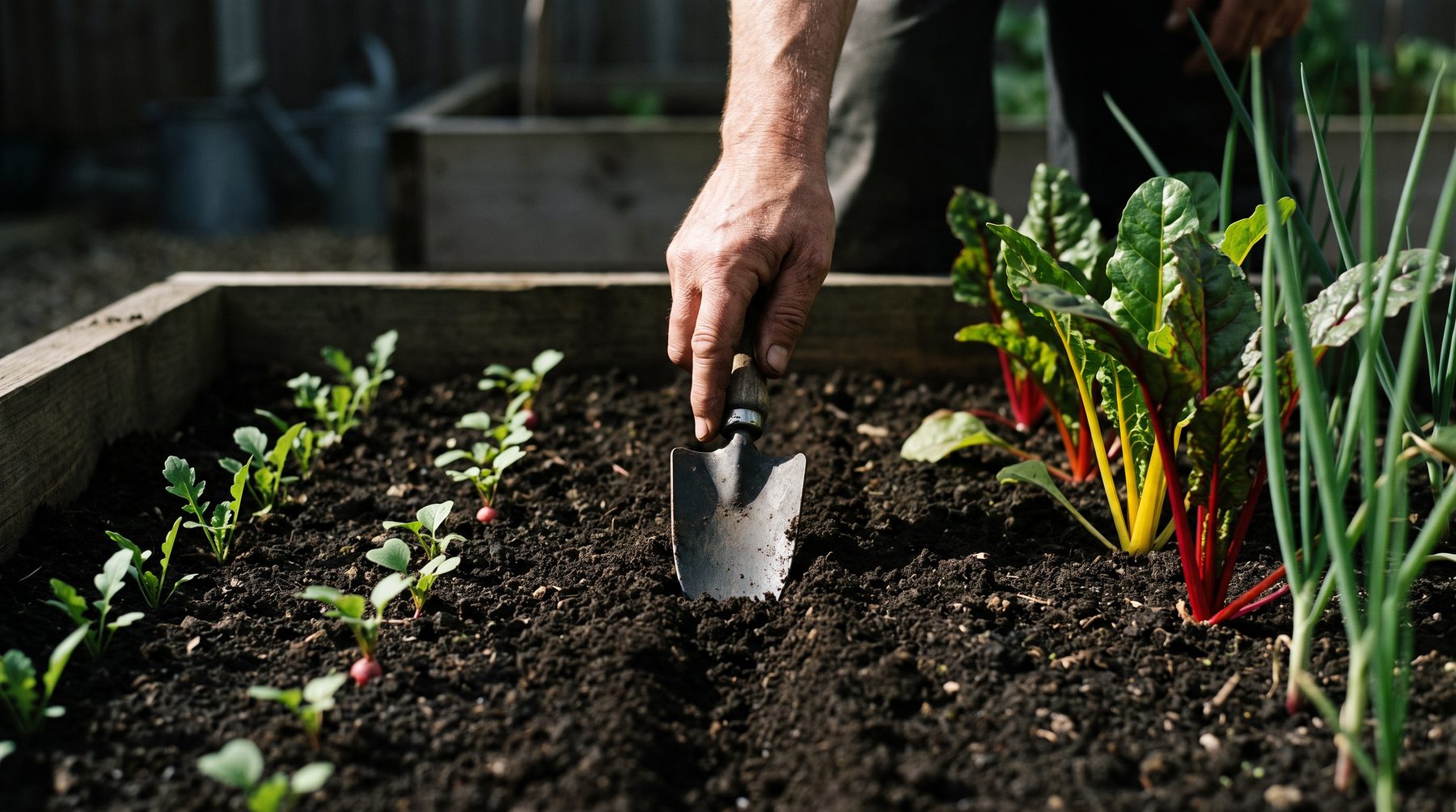
Illustrative AI-generated image: an August raised bed with rocket and radish just sown alongside established chard and spring onions. Not a photograph of a real event.
The Short Answer
Yes, several crops still have time after 15 August, but not because "it's still summer" — because the maths works out. Rocket and radish are the quickest. Spinach and spring onions aren't far behind. Turnips and winter lettuce round out the list. All six are still on GardenCalc's own August sowing list, drawn from the same planting calendar that sits behind our interactive planting calendar.
What decides it isn't the calendar month. It's whether the crop's weeks to harvest fit inside the weeks you have left before your first autumn frost. A crop that takes 4 weeks has a completely different late-summer deadline to one that takes 10. Get that comparison right and "is it too late" stops being a guess.
The Maths: Count Back From Your Frost Date
UK first frost dates vary far more by region than most sowing advice admits. Per Met Office HadUK-Grid 5km gridded observations (1991–2020), the first autumn frost typically arrives:
- Late October in the Scottish Highlands
- Mid-November to early December across most of England and Wales
- December or later in mild south-western coastal areas such as Cornwall
That is a real spread of ten weeks or more between regions, sown from the same date. Counting forward from 15 August:
| Region (typical first frost) | Weeks available from 15 Aug | What comfortably fits |
|---|---|---|
| Scottish Highlands (late Oct) | ~11 weeks | Anything 4–10 weeks to harvest — rocket, radish, spinach, spring onions |
| Most of England & Wales (mid-Nov–early Dec) | ~13–16 weeks | All of the above, plus turnips and winter lettuce with margin to spare |
| Mild SW coastal (Dec–Jan) | ~15–24 weeks | Everything above, with room for a second succession sowing |
Those week counts are simple calendar arithmetic from the published frost ranges above, not a promise for your specific garden. Frost dates are a distribution, not a fixed line, and local factors — a frost pocket, a valley bottom, an exposed plot — shift the real date further. For your postcode's actual estimate, use the frost date calculator, which is built from the same Met Office dataset and covers 2,728 UK postcode districts.
What Still Fits After 15 August
Cross-referencing each crop's typical time to harvest against the frost windows above:
| Crop | Time to harvest | Sowing window (outdoors) | Fits after 15 Aug? |
|---|---|---|---|
| Radish | 4 weeks | March–September | Comfortably, everywhere in the UK |
| Rocket | 4–5 weeks | March–September | Comfortably, everywhere in the UK |
| Spinach | 6–8 weeks | March–September | Comfortably, everywhere in the UK |
| Spring onions | 8–10 weeks | March–August | Yes, but sow in the next week or two — the outdoor window closes end of August |
| Turnips | Autumn crop | Included in GardenCalc's August "sow outdoors" list | Yes, standard August sowing |
| Winter lettuce | Grown on into autumn/winter | August–October | Yes — this is exactly its normal window |
| Coriander (slow-bolt variety) | 4–6 weeks | March–August | Only just — you're at the tail end; use a slow-bolt variety like 'Confetti' or 'Leisure' |
Source for the sowing windows and harvest times: GardenCalc's planting calendar, which lists month-by-month sow/plant/harvest data for each of these crops, cross-checked against the Royal Horticultural Society's grow-your-own vegetable guides.
What's Genuinely Too Late
The blanket "too late to sow" advice is wrong for the fast crops above, but it's right for the slow ones. From seed, in mid-August, these are past their window almost everywhere in the UK:
- Outdoor tomatoes — need to be planted out after the last frost in spring to ripen before autumn cold
- Sweetcorn — needs a full summer of heat; a mid-August sowing won't cob before frost
- Runner beans — needs around 12 weeks from sowing and, critically, warm soil and warm nights to germinate and set pods reliably; a mid-August sowing runs into declining temperatures long before frost arrives, and the flowers that do open won't set in cool evenings
- Maincrop potatoes — planted from seed potatoes in spring, not sown from seed in summer at all
These aren't "maybe if you're lucky" crops. They need the growing season that's already passed, not the one that's left.
Two Things That Cost More Yield Than the Date Does
Spacing
Warm August soil germinates fast, which makes it easy to sow too thickly out of habit from cooler spring sowings. Thin seedlings promptly once they're large enough to handle, following the spacing on the seed packet — crowded rows of any of the crops above will bolt or stay undersized rather than filling out properly.
Slug pressure
Late-summer soil stays warm and often damp, which is exactly the condition slugs favour, and young seedlings are their easiest target. Protect new sowings from day one with copper tape, wildlife-friendly slug pellets, or a physical barrier such as a cloche, rather than waiting to see if it becomes a problem. Winter lettuce and spinach seedlings are particularly vulnerable while small.
Evening watering leaves foliage and soil surface damp overnight, which favours slugs. An early-morning water lets the surface dry through the day. It's a small adjustment, not a guarantee, but it stacks with the physical protection above.
Frequently Asked Questions
Sources: Royal Horticultural Society — grow-your-own vegetable guides. Met Office HadUK-Grid 5 km gridded observations, 1991–2020, for frost timing — the same dataset behind GardenCalc's own frost date calculator. Crop sowing windows and harvest times per GardenCalc's own planting calendar. Contains public sector information licensed under the Open Government Licence v3.0. Disclaimer: sowing windows and frost dates are guidance, not a guarantee — check your postcode's own estimate and your local conditions before relying on any date for tender crops.
Free Seasonal Sowing Reminders
Join the newsletter for UK sowing windows and frost-date reminders timed to your growing season.
No spam. Unsubscribe anytime. We respect your inbox.